
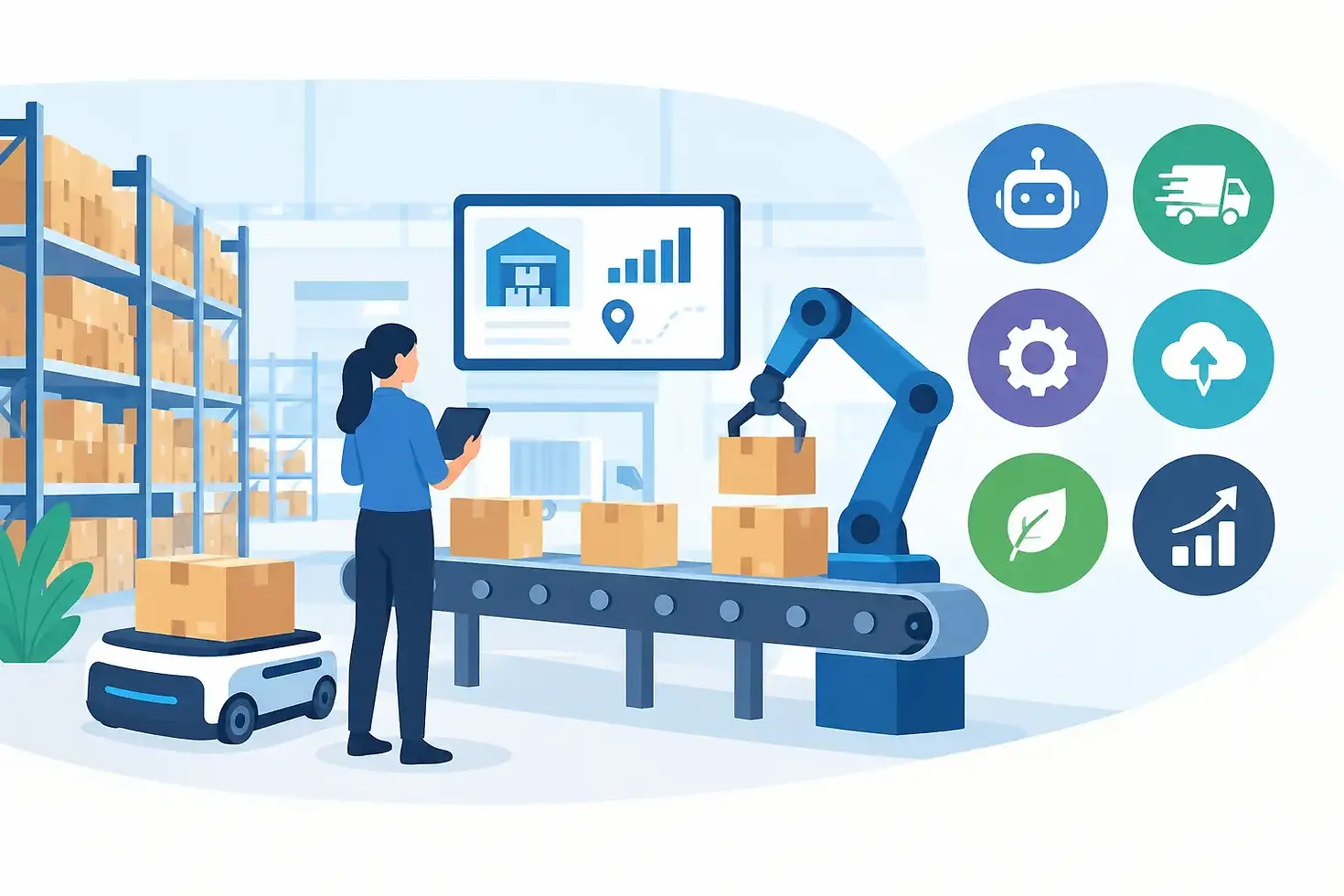
6 Fulfillment Automation Trends That Matter
Fulfillment automation trends are changing what growing brands should expect from a logistics partner. The goal is not to replace every warehouse task with a machine. It is to reduce preventable errors, move orders faster, give teams clearer visibility, and keep fulfillment flexible when sales volume changes.
For small and mid-sized e-commerce brands, the right automation can remove operational friction without forcing a major warehouse investment. The wrong approach can add cost, complexity, and rigid processes that do not fit the business. Here are the trends worth watching and the questions to ask before making fulfillment decisions.
1. Real-time inventory visibility is becoming the baseline
Inventory data that updates once a day is no longer enough for brands selling across a website, marketplaces, retail channels, and subscription programs. Modern fulfillment operations rely on inventory systems that update as products are received, moved, picked, packed, and shipped.
This visibility helps brands avoid overselling, identify slow-moving products, and plan replenishment before a stockout affects customers. It also gives operations teams a more accurate answer when they need to know what is available, what is allocated to open orders, and what is already in transit.
For a growing brand, the key is not simply having a portal with inventory numbers. Ask how frequently inventory updates, how adjustments are handled, and whether the system distinguishes between available, damaged, held, and inbound units. Clear inventory status prevents avoidable customer service issues.
2. Order routing is getting smarter
Order routing automation determines where an order should be fulfilled and how it should move through the process. For brands with multiple sales channels, it can automatically send qualified orders into the fulfillment workflow, apply the right shipping rules, and flag exceptions before they become delays.
The benefit is speed with consistency. A direct-to-consumer order, a retail replenishment order, and a subscription box shipment may all need different packing instructions, carrier services, labels, and documentation. Rules-based workflows help ensure those requirements are applied every time.
Automation should still leave room for human judgment. A rush order, address issue, inventory shortage, or special customer request may need a person to step in. The best systems make those exceptions visible quickly rather than allowing them to disappear in a queue.
3. Barcode scanning remains one of the highest-value tools
Not every meaningful fulfillment automation trend involves robotics or advanced artificial intelligence. Barcode scanning is one of the most practical ways to improve accuracy in receiving, picking, packing, and shipping.
When inventory is scanned at each critical handoff, the fulfillment team can confirm that the right SKU was received, picked from the correct location, and placed in the correct order. That process creates accountability and helps identify where an error occurred if a customer reports a problem.
For brands with product variants, bundles, or similar-looking packaging, this discipline matters even more. A simple scan-based verification process can reduce costly mis-picks while supporting faster training for warehouse staff. It is a strong example of automation that improves accuracy without adding unnecessary complexity.
4. Packaging decisions are becoming more data-driven
Packing automation is not only about equipment that builds boxes or applies tape. It also includes using order data to choose packaging that protects the product, controls dimensional weight, and presents the brand properly when the shipment arrives.
The right packaging decision depends on the product. Fragile goods may need protective materials, while apparel may benefit from mailers that lower shipping costs. Subscription boxes often require branded inserts, kitting steps, and a consistent unboxing experience. A single packaging rule for every order rarely produces the best result.
As shipping costs remain a close concern for e-commerce brands, fulfillment partners are using shipment history to spot opportunities to reduce oversized packaging and avoid unnecessary material. The trade-off is that too many packaging options can slow the floor down. The right program balances cost control with clear, repeatable packing instructions.
5. Carrier selection is moving beyond a one-size-fits-all approach
Automated shipping systems can compare service levels, shipping zones, package dimensions, delivery commitments, and negotiated rates before a label is created. This gives fulfillment teams a better way to apply a brand's shipping rules consistently.
For example, a brand may want to use an economical service for standard orders while protecting delivery speed for expedited orders or high-value shipments. It may need different rules for PO boxes, residential deliveries, Amazon prep shipments, or retail routing requirements. Automation makes these decisions more reliable at scale.
The lowest shipping rate is not always the best option. A late delivery can create more customer service cost than a modest increase in postage. Brands should define their priorities clearly: delivery promise, cost ceiling, insurance requirements, carrier preferences, and any exceptions that need manual approval.
6. Automation is improving exception management, not just normal workflows
The most visible fulfillment technology often focuses on orders moving perfectly from checkout to delivery. In practice, strong operations are defined by how they manage the orders that do not follow the normal path.
Address validation alerts, failed payment holds, inventory discrepancies, damaged product flags, carrier delays, and return requests all require attention. Automated notifications and task queues can surface these problems early, assign responsibility, and document the resolution. That reduces the chance that an issue becomes a missed shipping cutoff or an unhappy customer.
This is especially valuable for founders and lean operations teams. They do not need to monitor every order manually, but they do need visibility into the orders that require a decision. A fulfillment partner should provide clear communication when exceptions arise, not just automated status messages after the fact.
How to evaluate fulfillment automation trends for your brand
Before investing in technology or selecting a 3PL, start with the operational problems that affect your business most. Are orders shipping late? Are inventory counts unreliable? Is your team spending too much time copying information between systems? Are shipping costs unpredictable? The best automation plan is built around the constraints you actually have.
Look for systems that integrate cleanly with your sales channels and can support the workflow you use now. Then ask whether they can handle what comes next, such as retail orders, bundles, promotional spikes, subscription programs, or FBA prep. Flexibility matters because fast-growing brands rarely keep the same order profile for long.
It also helps to ask practical questions about implementation. How are products received and counted? What data is visible in real time? How are packing rules documented? What happens when an order cannot ship as expected? Who can help when a process needs to change? Technology is valuable, but dependable fulfillment still depends on disciplined processes and responsive people.
The right balance is automation with accountability
For many brands, a fully automated warehouse is neither necessary nor economical. High-volume, standardized product lines may benefit from more machinery, while a business with custom kitting, fragile goods, frequent launches, or complex retail requirements may need a higher-touch process.
That is why the most useful fulfillment automation trends are not about removing people from operations. They are about giving experienced teams better information, repeatable checks, and faster ways to act. At Ship Zebra, technology supports real-time tracking and process control, while hands-on service helps clients adapt when their business needs something outside the standard workflow.
Choose automation that makes your operation easier to manage, not harder to understand. When the process is clear, the data is reliable, and someone owns the exceptions, fulfillment can support growth without becoming the part of the business that holds it back.


Comments