
What Companies Use E Commerce Fulfillment?
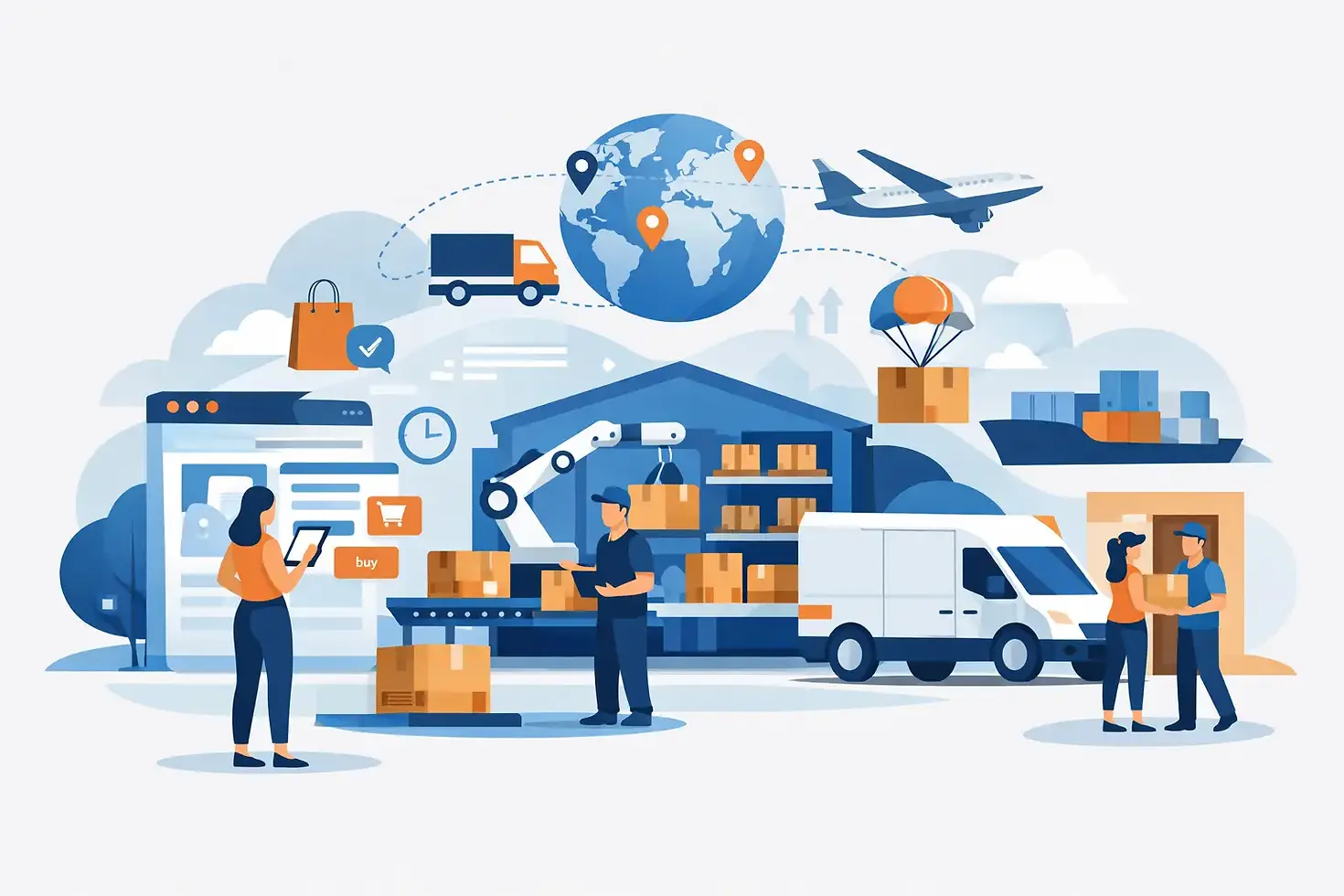
If you are asking what companies use e commerce fulfillment, the short answer is this: far more businesses outsource logistics than most founders realize. It is not limited to big retail brands or venture-backed startups. Small online stores, fast-growing Shopify brands, subscription box companies, Amazon sellers, and established wholesalers moving into direct-to-consumer all use fulfillment partners to keep orders moving without building an in-house warehouse.
That matters because fulfillment is usually where growth gets expensive, messy, and time-consuming. A business can market a product well and still lose momentum if shipping is slow, pick accuracy slips, or inventory visibility is poor. For many product-based brands, outsourced fulfillment is less about convenience and more about protecting the customer experience while keeping operations under control.
What companies use e commerce fulfillment most often?
The companies most likely to use e commerce fulfillment are product-based businesses that ship consistent order volume and need reliable backend operations. They may start out packing orders from a garage, spare room, or small office. But once order counts increase, the work shifts from manageable to disruptive very quickly.
Direct-to-consumer brands are the most obvious example. Apparel, beauty, wellness, home goods, pet products, supplements, and specialty food brands often outsource once daily shipping starts competing with marketing, inventory planning, and customer support. The founder should not be spending peak sales days printing labels and taping boxes.
Amazon sellers also rely on fulfillment support, especially when they need both direct-to-consumer shipping and prep services for marketplace inventory. In those cases, fulfillment is not just about packing outbound orders. It also includes receiving freight, labeling units, bundling products, meeting platform requirements, and maintaining stock flow so sales are not interrupted.
Subscription box businesses are another strong fit. Their operation looks simple from the outside, but kitting, assembly timing, SKU coordination, and deadline management can be difficult to run internally. A missed pack-out window can affect an entire month of revenue and trigger a wave of support issues.
Retail brands with wholesale and online channels also use third-party fulfillment. As soon as a business is shipping both parcel orders and retail replenishment, the warehouse process becomes more complex. Different order profiles, routing requirements, packaging rules, and inventory allocation all need tighter control.
Why these companies outsource fulfillment
Most businesses do not outsource because they cannot ship orders. They outsource because they can no longer ship orders efficiently.
At the early stage, in-house fulfillment can make sense. It gives the brand direct control and keeps costs simple while order volume is low. But there is a tipping point. Storage fills up, labor becomes unpredictable, shipping errors rise, and leadership spends too much time managing warehouse work instead of growing the business.
That is when a 3PL starts to make operational sense. The right partner gives a brand warehouse space, trained staff, shipping workflows, system integrations, and real-time visibility without the fixed cost of building all of that internally.
For many companies, the decision comes down to four pressures: speed, accuracy, flexibility, and cost control. Customers expect fast delivery and clean order execution. Internal teams need inventory visibility and predictable processes. Leadership needs a fulfillment setup that can handle promotions, seasonality, and growth without creating constant fire drills.
What types of brands benefit most from e commerce fulfillment?
Not every business needs outsourced logistics at the same stage. The strongest fit is usually a company that has proven demand and wants to scale without turning warehouse management into a second business.
Brands with growing order volume are one clear match. If your team is staying late to clear the day’s shipments, fulfillment is starting to constrain growth. The issue is not just labor. It is also the hidden cost of distraction, delayed projects, and inconsistent execution.
Brands with product complexity also benefit early. That includes businesses with bundles, inserts, gift messaging, fragile packaging, lot tracking, or subscription builds. These workflows are harder to manage than standard pick-and-pack, and mistakes tend to be expensive.
Companies selling across multiple channels are another common fit. A business shipping through Shopify, Amazon, retail accounts, and social commerce needs inventory coordination and channel-specific order handling. That gets difficult fast if the operation still depends on spreadsheets and manual workarounds.
There is also a category of brands that choose outsourced fulfillment because they want a better customer experience. Fast shipping, accurate orders, clean presentation, and dependable tracking are not back-office details. They shape repeat purchase behavior.
When in-house fulfillment stops making sense
A lot of founders wait too long to make the switch because they assume outsourcing is only for large brands. In practice, the better question is not company size. It is whether your current process still supports your growth.
If your storage space is full, your shipping area is taking over the office, or key staff members are spending hours each day on fulfillment tasks, those are signs the operation has outgrown its setup. The same is true if promotions cause delays, inventory counts are hard to trust, or customer service keeps handling where-is-my-order issues.
There are trade-offs, of course. In-house fulfillment offers direct oversight and can feel cheaper at very low volume. Outsourcing introduces onboarding, operational handoff, and service fees. But once labor, rent, materials, error rates, management time, and missed opportunity are counted honestly, many brands find that internal fulfillment was costing more than expected.
What companies use e commerce fulfillment by growth stage?
Early-stage brands use it when they want to look larger than they are operationally. They may only have a few core SKUs, but they need professional shipping, better inventory control, and room to grow.
Mid-sized brands use it to stabilize operations. At this stage, order volume is meaningful, channels are multiplying, and the cost of fulfillment mistakes is rising. They need process discipline, not just warehouse space.
More established companies use it for flexibility. They may keep part of fulfillment in-house and outsource overflow, special projects, subscription programs, or certain sales channels. For them, a 3PL is not just a vendor. It is part of the operating model.
That range is why the question what companies use e commerce fulfillment has such a broad answer. It includes startups, scaling brands, and mature sellers. The common thread is not size alone. It is the need for dependable execution.
How to tell if your company is a fit
A practical way to evaluate fit is to look at where fulfillment is creating friction.
If shipping is slowing down order turnaround, hurting accuracy, limiting storage, or pulling leadership away from sales and strategy, outsourcing is worth serious review. If your products require prep work, custom packaging, kitting, or strict handling standards, a capable fulfillment partner becomes even more valuable.
It also helps to think about seasonality. Some businesses can manage daily volume in-house for most of the year but struggle during launches or peak periods. A flexible 3PL can absorb those swings without requiring the brand to hire temporary labor, lease more space, or rebuild its workflow every quarter.
The biggest exception is a business with very low order volume or highly specialized handling that few partners can support well. In those cases, internal fulfillment may still be the better choice for now. Outsourcing should reduce operational friction, not add it.
What to look for in a fulfillment partner
If your company falls into the group that uses e commerce fulfillment, partner selection matters as much as the decision itself. Not all providers are built the same.
Look for a team that offers accurate receiving, secure storage, real-time inventory tracking, dependable order processing, and clear pricing. Service quality matters too. A fulfillment center should feel like an extension of your business, not a black box where orders disappear and issues take days to resolve.
For growing brands, flexibility is especially important. You may need standard pick-and-pack today and subscription kitting, retail prep, or Amazon prep next quarter. A boutique operator with disciplined systems can often provide the right balance of responsiveness and operational consistency. That is where a partner such as Ship Zebra can make sense for brands that want both white glove service and reliable execution.
The companies that use e commerce fulfillment most successfully are usually the ones that treat logistics as a growth function, not just a shipping task. When fulfillment works, your team gets time back, customers get a better experience, and the business has room to scale without operational strain. If your warehouse process is starting to dictate how fast you can grow, that is your signal to look at the backend more seriously.


Comments